
Puls Fabata with Phoenician Bread: the recipe that unites two worlds
What did the ancients use in the kitchen, lacking the efficient technological tools available today? Among the most common kitchen containers of the Roman tradition, we can certainly count the caccabus. This is a concave ceramic artifact, with a slightly convex vertical wall and a dome-shaped lower part. It is mentioned by Apicius (V, 2-1) as a "tool for cooking pulmentum," and fully or partially intact examples come from residential contexts in Pompeii and Herculaneum, such as the House of the Beautiful Courtyard.
To better understand the function and technologies related to the caccabus, we hypothesized its use for cooking puls fabata, a common legume and spelt soup, reproducing the vessel with the intent of observing its behavior during the experiment, in which we attempted to replicate the same working and cooking processes as they must have been in antiquity.
In the first phase of the experiment, an attempt was made to obtain a specimen of caccabus by opting for hand-modeling using the coiling technique, starting from a clay with small-sized inclusions. Once the shape was obtained — 10.5 cm in height and 19.5 cm in diameter — the surfaces were smoothed using wooden gouges. Following the firing phase, it was observed that the artifact underwent a slight reduction in size and weight, from 1 kg pre-firing to 800 g, as well as the appearance of small cracks on the inner surface.
To recreate the dish, we used the recipe reported by the sources: 250 g of grain barley, 100 g of black-eyed beans, salt, oil, 1 onion, and 20 g of smoked ham or speck. First, the caccabus was placed on embers not in direct contact with the flames, and then a sauté of onion and speck was made. Then, once ready, the spelt was added and, after toasting it for approximately 10 minutes, everything was covered with water. After 20 minutes the beans were added. Cooking was completed after approximately 1 hour and 30 minutes, and in the final phase the formation of two large lateral cracks was noted due to the prolonged exposure to the flames. This caused the puls to leak out and the formation of carbonaceous incrustations at the fractures, as well as on the bottom. Across the entire outer surface, a diffuse sooting area was evident with some darker zones, while at the same time the inner surface at the rim attachment was affected by the appearance of non-carbonaceous incrustations and the presence of spelt caryopses on the walls and bottom.
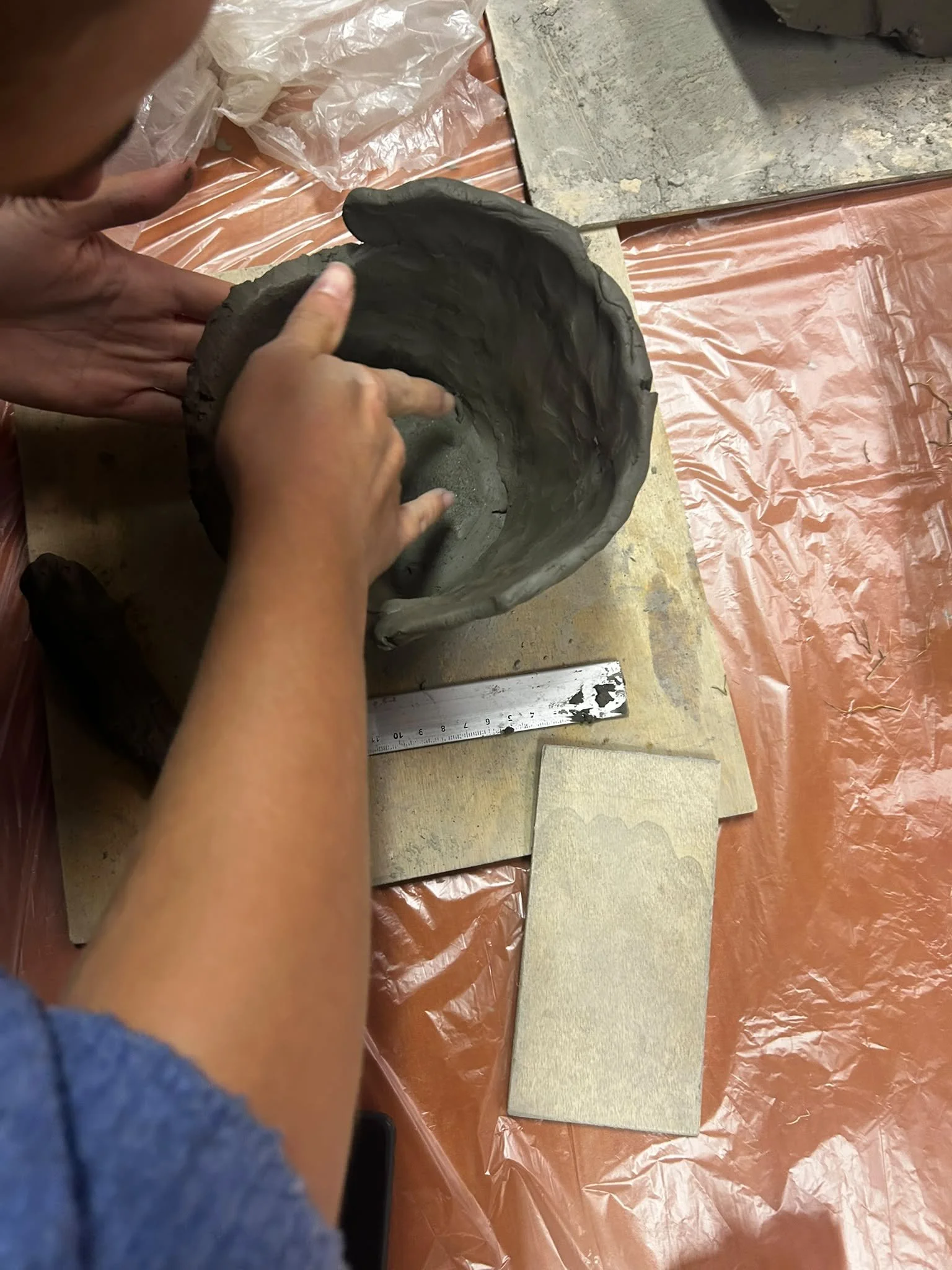
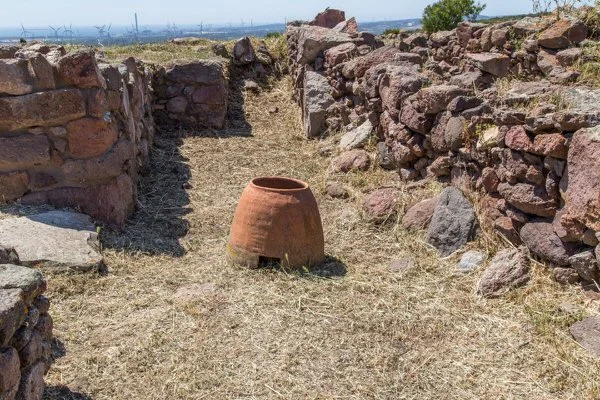
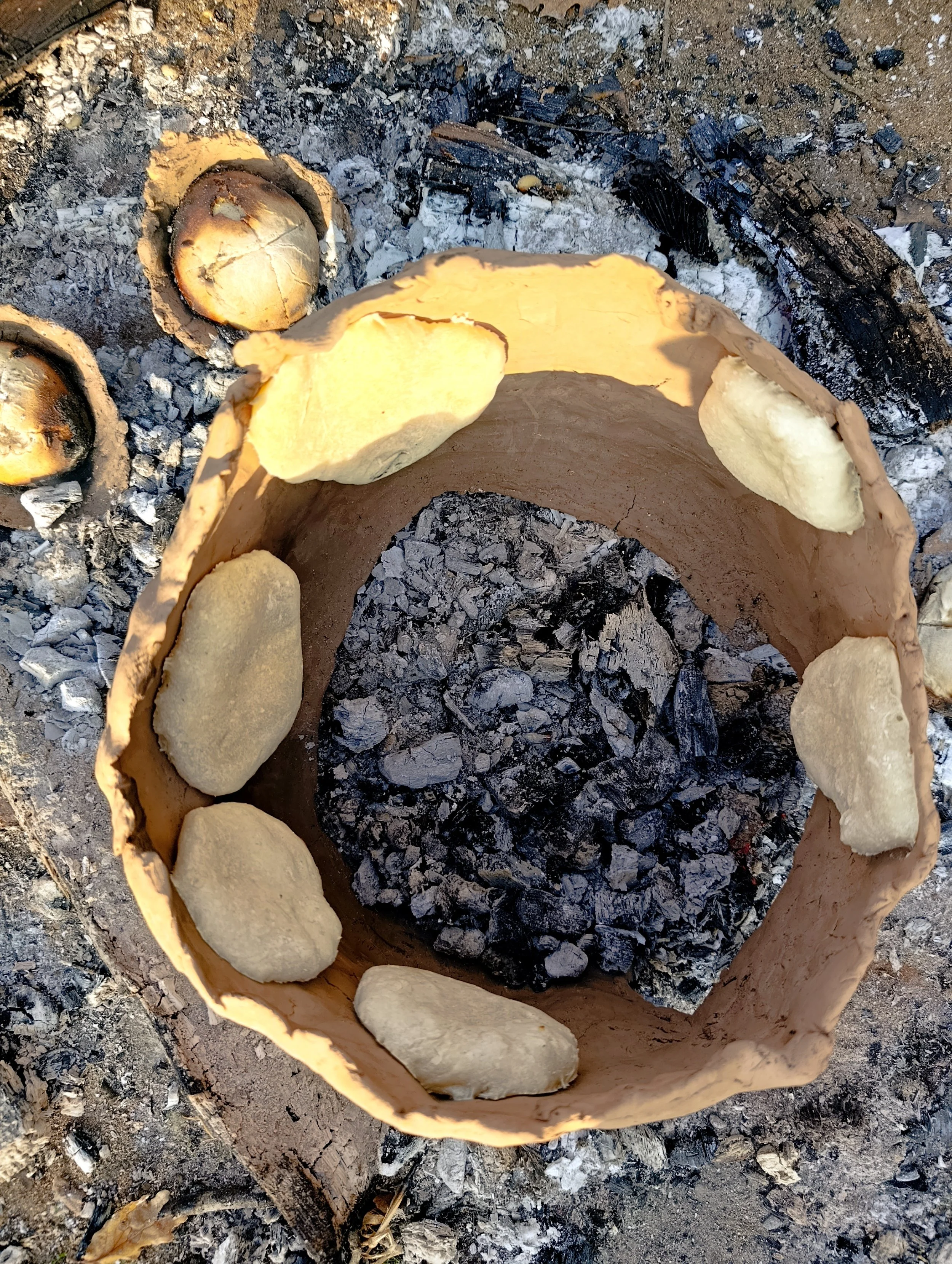
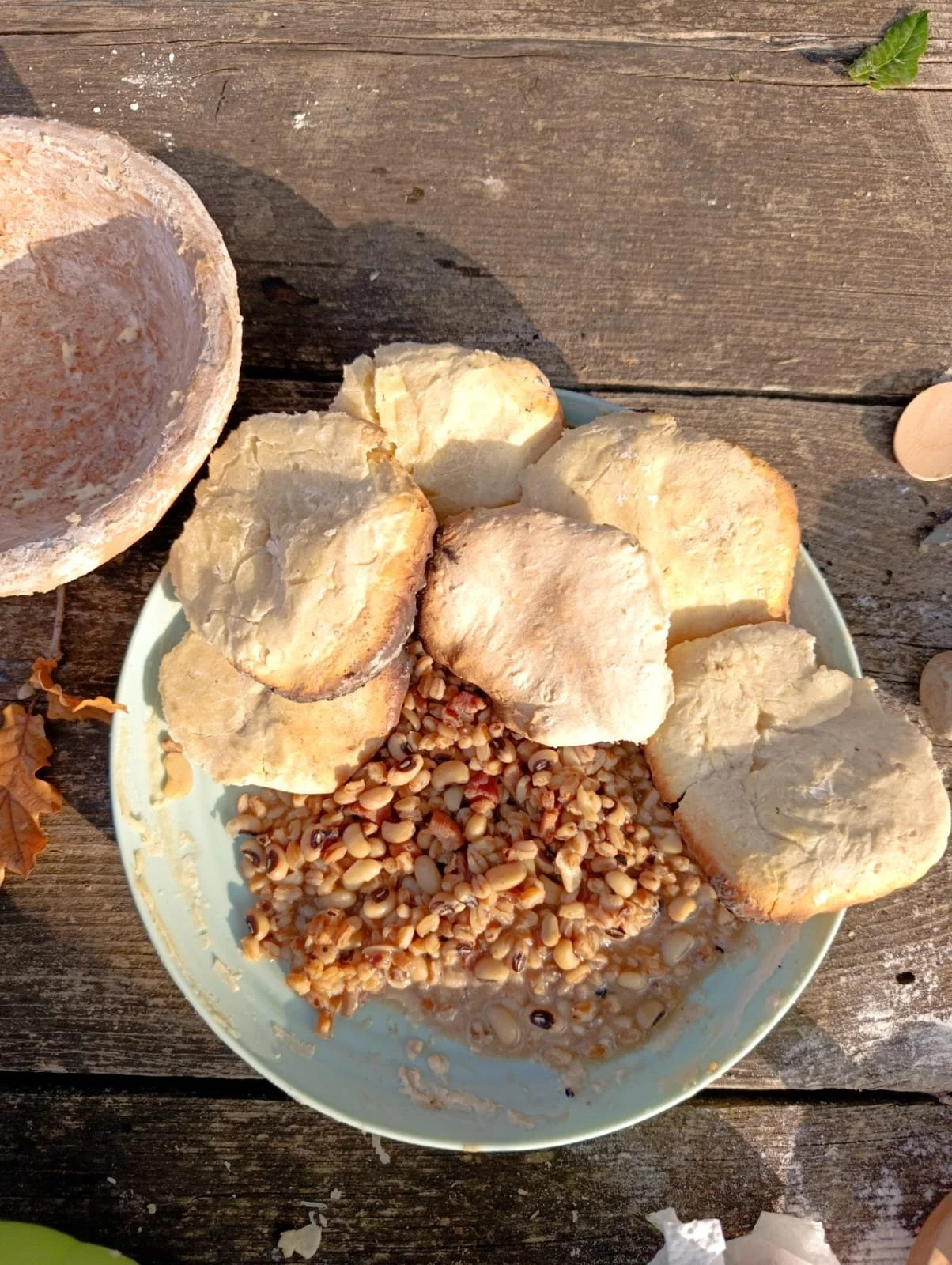
The experiment also included the construction of the tannur, a truncated-cone-shaped terracotta bread oven, equipped with an upper opening and a slot at the front lower part. This is widely attested in private Phoenician and Punic dwellings of the western Mediterranean; in particular, the so-called T3 type from the site of Nora, dated to the 5th–2nd century BC, was taken as a reference. For the tannur as well, hand-modeling using the coiling technique was employed, with the creation of bands of approximately 5 cm in thickness from a clay with calcareous and sandy inclusions, followed by surface smoothing at the joints. Already during the shaping phase, a series of problems arose: the artifact experienced numerous collapses, making it impossible to achieve the smaller diameter of the upper opening. Following firing, the artifact underwent a reduction in weight and the formation of highly diffuse fractures on the surface, particularly at the lower slot. An dough was then prepared using barley flour and water, which was divided into small balls and flattened to obtain discs. Once obtained, an attempt was made to use the cooking method specific to this type of oven, still employed today in the culinary traditions of the Middle East and Central Asia: the dough discs were pressed against the previously heated inner walls of the tannur and, once fully cooked on both sides, detached from the surface. However, the first attempt to cook a disc failed since it could not be attached to the wall due to the low viscosity of the dough. By consequently adding a greater quantity of water, the second attempt brought the cooking process to completion thanks to the correct execution of the procedure. At the end of use, the tannur also showed a diffuse sooting area on both the inner and outer walls, as well as white-colored dough residues on the upper portion of the interior.
The experimental project, developed and carried out, made it possible, through an experiential approach, to outline what may have been some of the tools and recipes of everyday Roman cooking, hypothesizing a possible use of the caccabus for cooking puls fabata. In this way it was also possible to engage with all the contingencies related to the production and use of ancient artifacts.
Bibliography
Annecchino M., "Suppellettile fittile da cucina di Pompei," in Annecchino M., Bisi Ingrassia A. M. (eds.), L'Instrumentum domesticum di Ercolano e Pompei nella prima età imperiale, Rome 1977, pp. 105–115;
Campanella L., "I forni, i fornelli e i bracieri fenici e punici," in Nora. Il Foro romano: storia di un'area urbana dall'età fenicia alla tarda antichità 1997–2006, Padua 2009, pp. 470–579;
Toniolo A., "La cucina degli antichi: esperienze e metodi nella realizzazione di alcune ricette culinarie di età romana," in Quaderni di archeologia del Polesine, 1.2000, pp. 311–326; Pliny, Naturalis Historia, 18, 28; Apicius, De re coquinaria, 5, 2, 1.