
A Bronze Age Dessert? The Fermented Fruit "Yogurt" of Pilastri
In the collective imagination, the diet of pre-Roman Italy is often reduced to a monotonous consumption of roasted meats and boiled grains. However, the evidence emerging from the excavations of the Terramara of Pilastri — a Bronze Age agricultural and productive settlement in the heart of the Po Valley — paints a far more sophisticated culinary picture. The site was not merely a village of moat-surrounded huts, but a complex production centre, as demonstrated by the discovery of an actual ceramic workshop. Here, using bone and deer antler tools, a standardised technology was produced: local clay tempered with calcite or grog (crushed ceramic fragments) and fired in structures capable of reaching stable temperatures of 800–850°C, consistent with remarkably advanced kilns for the period.
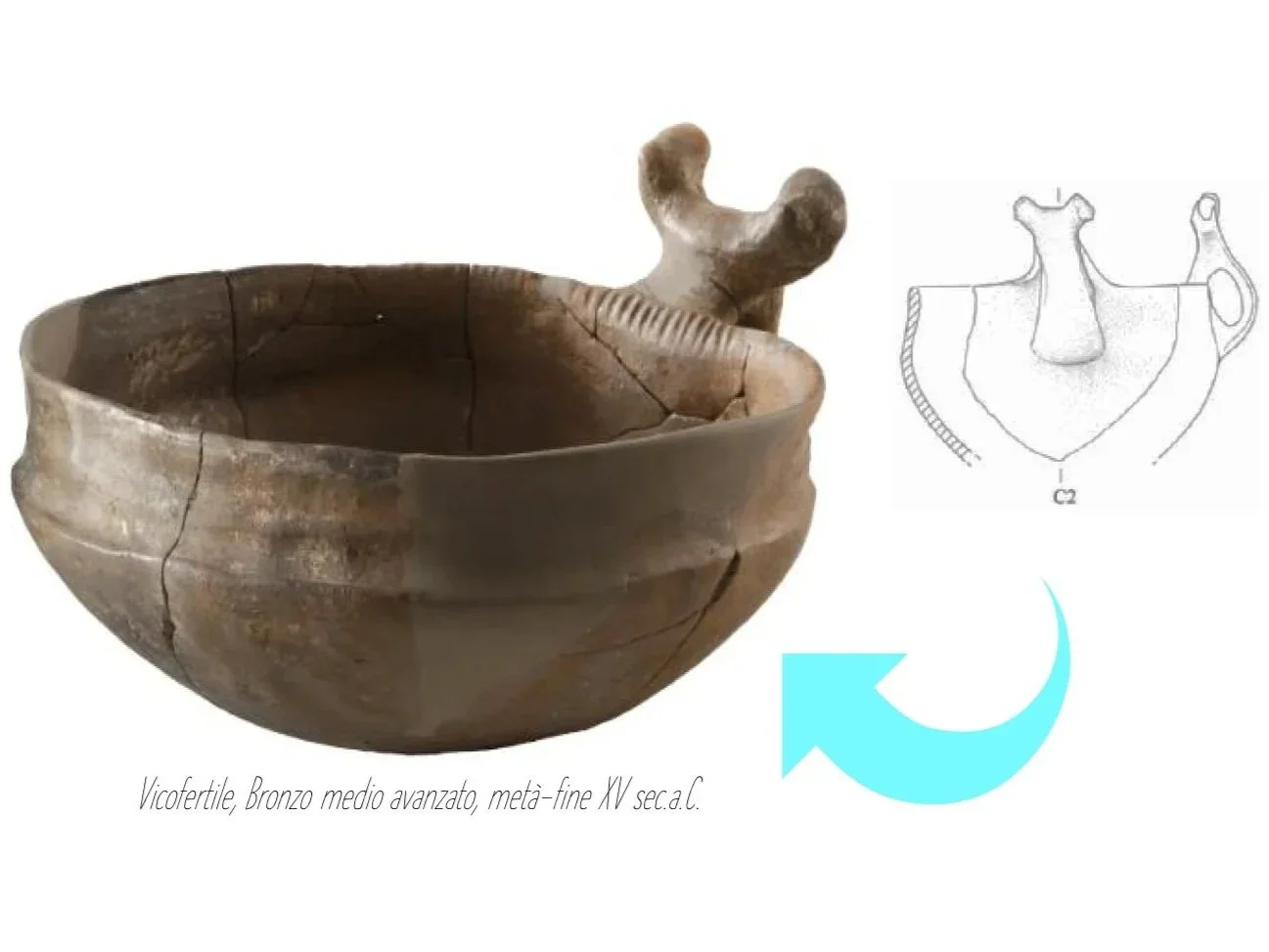
The centrepiece of this research is a carinated cup with the characteristic "horned" handle, a distinctive feature of the regional Recent Bronze Age. Chemical analyses carried out on residues absorbed into the porous walls of the vessel revealed a complex chemical mosaic: the presence of cholesterol and stearic acid confirms contact with animal-derived substances (dairy products or animal fats), while the detection of malic, succinic, and hydroxycinnamic acids opens new perspectives on the plant-based component. The notable absence of tartaric acid rules out grape wine, suggesting instead that the malic acid derived from the fermentation of other fruits — most likely apples.
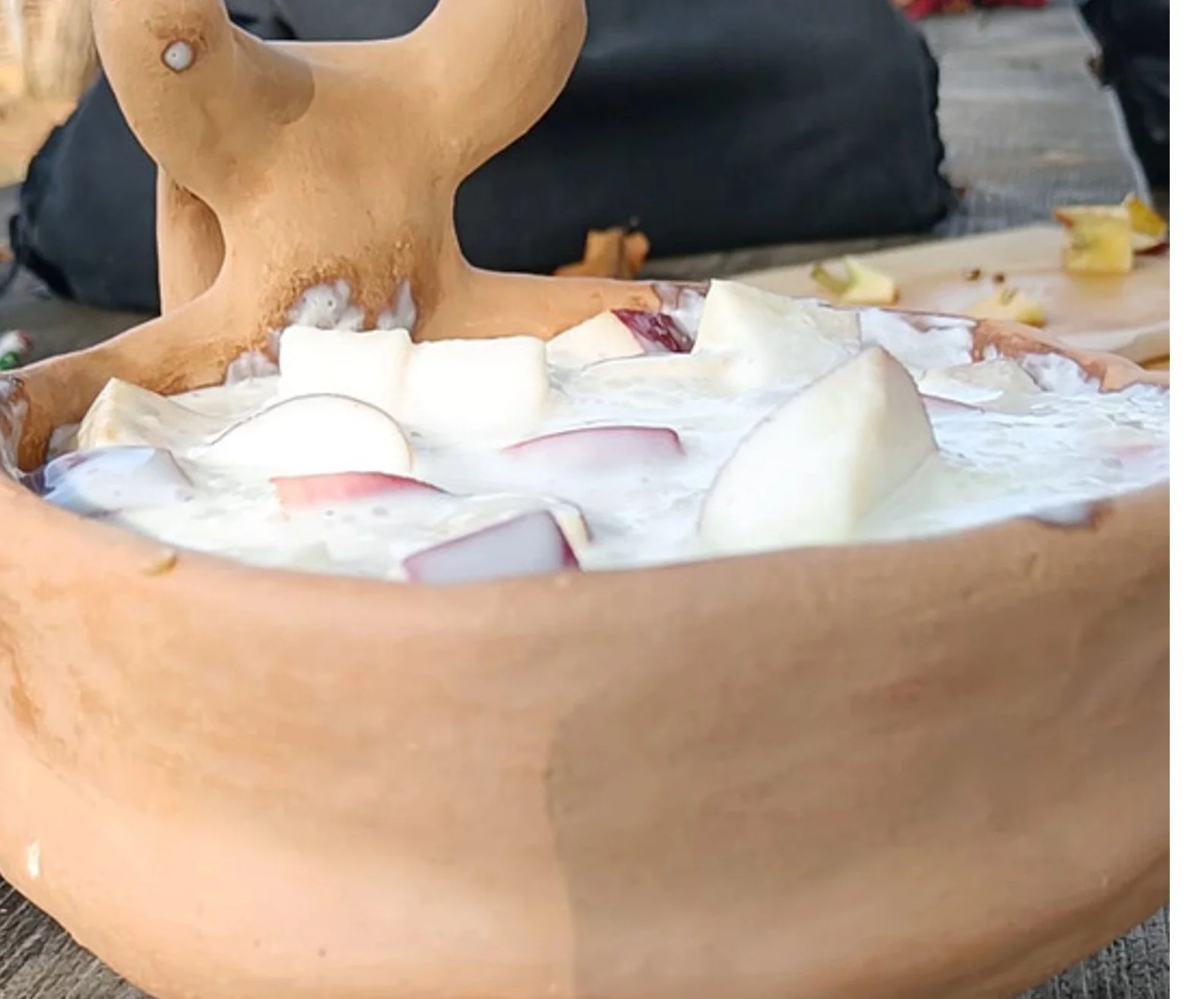
Is it possible, then, that the vessel was used to produce a drink based on animal fat and fermented fruit?
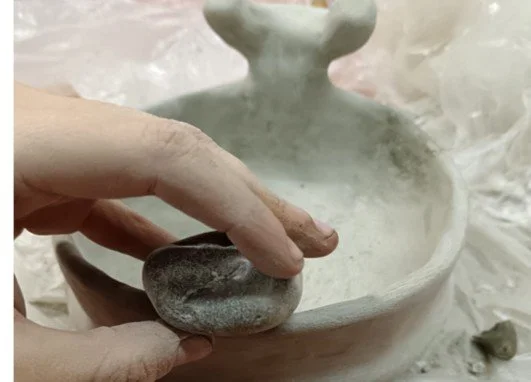
To test this hypothesis, it was necessary to reconstruct the artefact following parameters derived from the archaeological data, in order to understand the vessel's potential function. The results of the experimental work disproved the use of the cup as a primary production container. After just 48 hours, the preparation underwent rapid deterioration: the inherent porosity of the ceramic and the absence of an airtight seal prevented the conditions necessary for controlled, sustained fermentation.
We can therefore conclude that the cup was not the site of production, but of consumption. The discovery of such chemically diverse traces indicates that the cup did not serve a single function, but was a versatile container in which, on different occasions, both meat broths and fermented beverages could have been served.
A fundamental aspect of experimental archaeology is public engagement. This project sought to involve both social media audiences and schools. Through the Instagram page "Past Eat", the experiments were documented and shared, while with the support of students from the CMPF Hospitality Institute of Castel Fusano it was possible to recreate and taste some of the recipes under investigation, creating a tangible bridge between archaeology and cuisine. Experimental archaeology thus proves to be a discipline of continuity — one capable of restoring the dimension of lived experience to what time has reduced to mere fragments.
BIBLIOGRAPHY
Nizzo, V., Balasso, A., Bergamini, S., Cupitò, M., Dal Fiume, L., Marchesini, M., Marvelli, S., Michelini, P., Osti, G., Pirani, M., Tassi, S. & Vidale, M. (2015). Lo scavo della 'Terramara' di Pilastri (Bondeno, FE): storia di un'esperienza condivisa, tra Memoria & Terremoto. Forma Urbis, XX(2), 42–56.
Pecci, A., Nizzo, V., Bergamini, S., Reggio, C. & Vidale, M. (2017). Residue analysis of late Bronze Age ceramics from the archaeological site of Pilastri di Bondeno (northern Italy). Preistoria Alpina, 49, 51–57.
S.Y. Waksman (ed.), Archaeometric and Archaeological Approaches to Ceramics. BAR International Series 1691. Oxford: Archaeopress, pp. 87–99.
Cover picture: Experimental replica of a horned carenated bowl (Ph. A. Pau)